Fast moving consumer goods (FMCG) companies are expected to see muted topline growth, with uneven spread of the monsoon impacting demand. Rural demand recovery, too, remains elusive in the July-September quarter. Brokerages expect volumes to remain steady in the quarter on a sequential basis.

India indulges in the most sophisticated marketing campaigns but has poorest branding, says Shombit Sengupta, Founder, Shining Consulting.

While demand for hair care products is increasing in both rural and urban markets, urban consumers have proven to be more extravagant, reports T E Narasimhan.

60-65 per cent of the FMCG industry's overall sales come from urban areas; 35-40 per cent from rural areas.

'Kerala isn't as dependent on agriculture like Bihar or Odisha or even other southern states.' 'Economic losses would not be too intense, unlike other states.' 'The floods could, at best, impact India Inc's earnings for a quarter or two.'

Sanjiv Mehta, chairman of the country's largest consumer goods company, HUL, believes that the second wave of the Covid-19 pandemic between April and June this year has been a mere pause in India's consumption story, and that it will not change the country's overall growth trajectory. India is poised for growth, especially in the fast-moving consumer goods (FMCG) sector, Mehta told shareholders at the company's annual general meeting on Tuesday. The signs of recovery are becoming evident with many states lifting lockdown restrictions in recent weeks.

FMCG firms such as ITC, Parle Products, Marico, Emami, PepsiCo India and CG Corp Global on Wednesday assured uninterrupted supply of their products based on the learnings from the last year's lockdown, even as surge in COVID-19 cases in India forced Maharashtra to declare a 15-day curfew while other states also imposing various restrictions.

FMCG and retail giants are making good use of technology to reach out to rural India.

It may be a little early to cheer the recovery in the fast-moving consumer goods (FMCG) space as a deceleration in discretionary demand, after the festival season, may offset fragile rural recovery, analysts have cautioned. "The overall demand environment for staples remains muted, while discretionary demand trends have seen some deceleration after the festival season. "We believe margins in staples have bottomed out, but we expect only a gradual uptick with the ongoing softening in raw material prices.
Amway surged by converting a multitude into sales agents.

Now, a new dawn breaks for Sangeeta Pendurkar, 43, who takes charge mid-month as managing director at Kellogg India.
Harsh Mariwala, CMD, Marico Industries, touched upon the key challenges facing marketers and what brands must do to remain relevant.

Apart from the growing adoption of the internet in the country, brands are drawn to the agility of the medium, its targeted and data driven approach and the increasing cost of offline channels for sales and distribution.

In terms of stock selection, India continues to benefit from two phenomena - the big getting bigger and availability of quality stocks in relative abundance compared with its Asian peers.

'Clearly, the next few months will be very challenging for industry.' 'We are clearly in a phase where recovery is a dream.'

India has no idiosyncratic innovation ecosystem, distinctively its own. Our VCs will not rush to fund brilliant ideas, says R Gopalakrishnan.
Exit polls have a way of going horribly wrong, as they did in 2004. And India Inc is hoping it stays that way this time, too. That's because industry is concerned that the fractured verdict predicted by various media channels on Thursday would mean continued uncertainty on the economic policy initiatives that need to be taken up on a war-footing.
The combined dividend payout by early-bird companies -- those that have declared their results for FY21 -- is up 8.9 per cent, lower than the 21.9 per cent rise in in FY20 but ahead of the underlying growth in India Inc business last year. Combined net sales of these early birds were down 1.8 per cent last financial year while net profit was up 27.3 per cent in FY21. Some top companies that have stepped up dividend payout in FY21 include Hindustan Unilever, Indus Towers, Tata Steel, Ultratech Cement, Larsen & Toubro, Dabur, Asian Paints, and UPL. In contrast, banks have skipped dividends under an RBI diktat while companies such as Marico, TCS, Maruti Suzuki, and Godrej Consumer are paying lower dividends for FY21.

Ajit Mishra, vice president, Research, Religare Broking, answers your queries.

Logistics services provider Delhivery is likely to launch its downsized initial public offering (IPO) this week, said people in the know. The Softbank-backed firm may trim its issue size from Rs 7,460 crore to Rs 5,500 crore to align with the volatile market conditions, sources said. Sources added the fresh issue component of the IPO could be reduced to Rs 4,500 crore and the OFS component to Rs 1,000 crore.

The country's largest retailer Reliance Industries on Monday announced that it will enter the fast-moving consumer goods (FMCG) business this year as part of its expansion plan. Addressing the 45th AGM of Reliance Industries on Monday, Reliance Retail Ventures Ltd (RRVL) Director Isha Ambani said: "This year, we will launch our FMCG goods business". The objective of this business will be to develop and deliver products and solve every Indian's daily needs, with high-quality products at affordable pricing, she said while addressing Reliance Industries' annual general meeting.
The global Indian company has hit gold in the Emirates of the Gulf.

Companies from Nestle and ITC to Hindustan Unilever and Patanjali have pledged to reduce use of unhealthy ingredients by five to 50 per cent
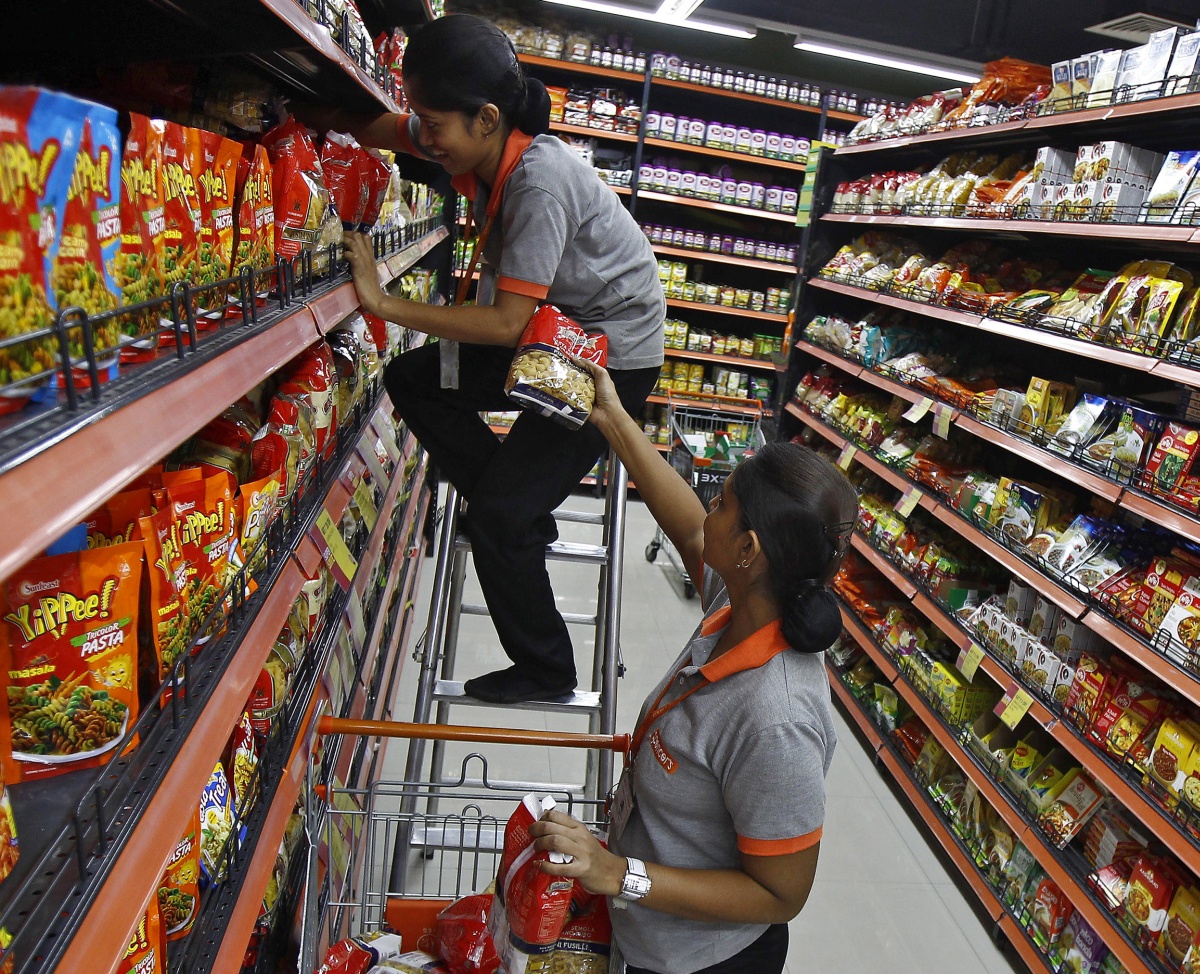
However, rural demand continued to remain a concern for FMCG companies during the quarter.

'The correction could take two to three months and traders need to be careful.' 'For investors, this could be a good time to nibble in.'

Companies whose products have not been picked up for distribution in Gujarat under a "non-cooperation movement" include Marico, Dabur, Emami, Britannia, Reckitt Benckiser, and Godrej Consumer Products.

Chief executives in the real estate, consumer products, automobiles, construction, and textile sectors said they were all expecting workers to re-join in the next 45-60 days, which would help them ramp-up production from July.

What is driving the digital-first approach of traditional, legacy brands? Apart from the growing adoption of the internet in the country, brands are drawn to the agility of the medium.

Some of these items of consumption include ultraviolet disinfectants and sanitising boxes, free-finger touch devices, do-it-yourself grooming kits, self-cleaning water bottles, smart tiffin boxes, hand-sanitizer wearables, antiviral fabrics, tiles, flooring and mattresses, and anti-fogging glasses.

USAID looks forward to working with each to make financial inclusion a long-lasting and sustainable reality in India.

The role of AI spans coaching, performance, learning, engagement and career growth.
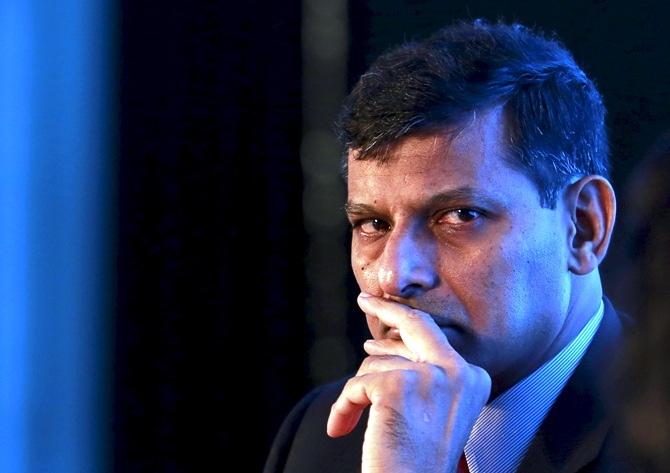
India's captains of industry said they were disappointed at the exit of Reserve Bank of India Governor Raghuram Rajan.
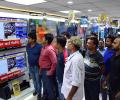
Nearly all FMCG companies like Marico, HUL, ITC and the rest have been indicating that the operating environment has been challenging, with drop in consumption, especially in rural areas, severe crunch in market liquidity conditions, and disruptions and floods in several parts of the country. To overcome this, they are boosting their direct reach in the countryside.
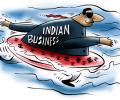
Combined profit before tax of 81 firms down 37.5% y-o-y, worst show in at least 3 years.

Age and experience not less relevant but firms are gradually moving towards younger leadership teams

Who is to take their place? Will a new generation of entrepreneurs start up with better business sense, or at least better luck? But the so-called unicorns are mostly copy-cat entrepreneurs whose cash flow is funded by overseas (including Chinese) money, notes T N Ninan.

"India will be home to a fifth of humanity, its economy 16 times bigger than today, and one of the world's largest consumer markets. India will be a world better in many areas"
Despite near-term headwinds of rising input costs and the possibility of lower demand for products as Covid dented rural & urban India, and impacts both production & consumption, analysts remain bullish on stocks of fast moving consumer goods (FMCG) companies and expect the index to relatively outperform its peers in the second half of fiscal 2021-22 (FY22). In the past one year, prices of key commodities such as groundnut oil, mustard oil, Vanaspati, soya oil, sunflower oil and palm oil have shot up in the range of 20 per cent to 60 per cent, data show. The FMCG sector macros in this backdrop, according to analysts, have further deteriorated because of weakness in consumer demand and likely margin pressure due to elevated crude oil, palm oil and global food prices.
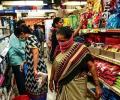
Some analysts see more upside in FMCG stocks given the performance gap between the sector and the market.
